May 16, 2013

How Tim Hardaway Sr. Learned To Be A Better Sports Dad


This guest post comes to us from Dr. Andrea Corn, youth sports psychologist and Ethan Skolnick, a sportswriter for the Palm Beach Post covering the Miami Heat:

How does an athletic parent motivate their child? Frequently, with the same tactics that worked with them when they were young. In Raising Your Game: Over 100 Accomplished Athletes Help You Guide Your Girls and Boys Through Sports, Tim Hardaway Sr., acknowledges that, as a child, he took constructive criticism well. He turned others' doubts into the motivation, “to show you I could do it,” he says. His toughness in the face of adversity helped him survive and even thrive in a rough neighborhood on the south side of Chicago.

May 14, 2013

Using Training Data For Long Term Player Development


Imagine if you were given the task to find the next John Terry, Andy Murray or Katie Taylor.  You know that they’re out there somewhere kicking a ball, returning a serve or winning a bout among thousands of other kids their age.  While some look like future champions at age 7, it’s unknown what they’ll be like at 17.

Finding a group with some genetic gifts and then developing them through years of physical and mental growth demands access to new tools with one secret ingredient, data.  Just ask Ben Smith and Marco Cardinale.

In a recent interview with the Big Data Insight Group, Ben Smith, Head of Development Performance Systems for Chelsea Football Club, commented, “The professionalisation of sport has been dramatic over recent years and it’s only going to continue. There’s a huge amount of money and drive within the industry today; the rewards are massive for those getting things right and they’re substantial for getting it wrong – data analytics helps us ensure we do the former and avoid the latter.”

May 10, 2013

How Football Players React To Sound On The Field


Russell Wilson
For as much as we hear about the importance of vision on the football field, there are quite a few phrases emphasizing the sounds of the game, such as “he heard footsteps coming”, “listen for the audible at the line”, “play until you hear the whistle” and even the backhanded compliment to the ears, “he has eyes in the back of his head.”

Listening is a skill to be exploited for better anticipation, reactions and decision-making.  Now, neuroscience researchers have filled in some missing details of how we actually use the sounds around us to instantly direct our muscles to take action.

May 6, 2013

To Know Where You're Going, You Have To Know Where You've Been


What happened out there? You thought you were ready. You thought your training went well last week. You thought your pre-competition routine was the same as always. Now you’re wondering why you hit the wall early and just had an off day. 

Consistently performing at a high level depends on creating the right combination and pattern of training that yields the best outcome. Even a small change to that ideal routine can result in a poor performance. Finding that wrong turn requires retracing your steps through your recent training sessions.

Unfortunately, many athletes lack a system to capture not only the quantitative data but also the qualitative information about their mood, motivation and daily activities that may have affected their results. In all of the noise of today’s high-tech monitoring devices, the simplicity of a training diary often gets overlooked.

May 3, 2013

The Neuroscience Of Pitch Recognition


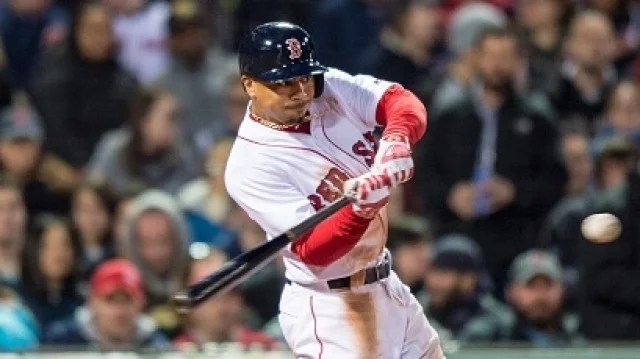
When asked to describe Greg Maddux, the retired 4-time Cy Young award-winning pitcher, Wade Boggs, a Hall of Fame hitter with a .328 lifetime batting average, once said, “It seems like he's inside your mind with you. When he knows you're not going to swing, he throws a straight one. He sees into the future. It's like he has a crystal ball hidden inside his glove.” 
So, what did Maddux know that other pitchers don’t?  Neuro-engineers from Columbia University decided to actually look inside some hitters' brains to try to find out.
Maddux, who seems to be a lock for the 2014 Hall of Fame class, earned a reputation for knowing batters so well that he could think one step ahead of them.  "When you think it's a ball, it's a strike,” confessed former Yankees manager Joe Torre. “When you swing at what you think is a strike, it's in the dirt. He was a remarkable pitcher."  This lack of pitch recognition skill by hitters is what all good pitchers try to exploit.  While hours of batting practice try to teach this through repetition, there have been surprisingly few attempts at finding out what’s really happening under the batting helmet.

Apr 25, 2013

Why The Best Soccer Players Are Real Head Turners


In soccer, like many sports, the goal scorers get the headlines. Yet, they will secretly admit that the final pass played to them is very often their key to unlock the defense. Without the vision of a teammate to pick them out of a crowd, their finishing skill is almost useless.
As players progress through the ranks of high school, college and beyond, not only do their opponents get quicker with their feet but also with their eyes and brains.  Their time with the ball gets shorter forcing them to either make the correct pass or avoid the oncoming defender.  The luxury of time to survey the field for targets after they receive the ball is now gone.  The available options need to be gathered and assessed constantly so that when the ball arrives at their feet, the homework is already done.
So, what do top players do differently that makes their decisions consistently fast and correct?  Geir Jordet, a professor at the Norwegian School of Sport Sciences, specializes in perceptual expertise in soccer.  At last month’s MIT Sloan Sports Analytics Conference, he presented new research on what he describes as “the hidden foundation of field vision.”

Apr 23, 2013

Make Rick Reilly Donate $20K To Nothing But Nets

As you may have noticed when visiting 80% Mental, there has always been a box over to the right of the main page connecting you to the Nothing But Nets program.  Of all the many worthwhile causes out there, the simplicity of buying a insecticide-treated bed net for a child or family to keep them safe from malaria-carrying mosquitos always made sense to me.

With April 25th being World Malaria Day, could you please check out Rick Reilly's challenge below?  He is matching all bed net donations through Thursday, up to 20,000.  The bed nets are $10 each to purchase, deliver and set-up for a thankful family.

I really appreciate everyone who visits this site.  Let's make Rick pry open his checkbook!

Thanks!
Dan

Apr 5, 2013

Why Steve Nash Makes More Free Throws Than Dwight Howard


Every time Steve Nash goes to the foul line, he shoots five or six free throws. Sure, there’s the two that really count, but the NBA’s all-time free throw percentage leader always takes several imaginary shots before getting the ball.  He says it helps him not only visualize the ball going through the net but also gets his brain and body prepped for the upcoming motor skill.  After almost 3,400 regular season attempts, his 90.4% success rate seems to work, even if Dwight Howard isn’t interested.
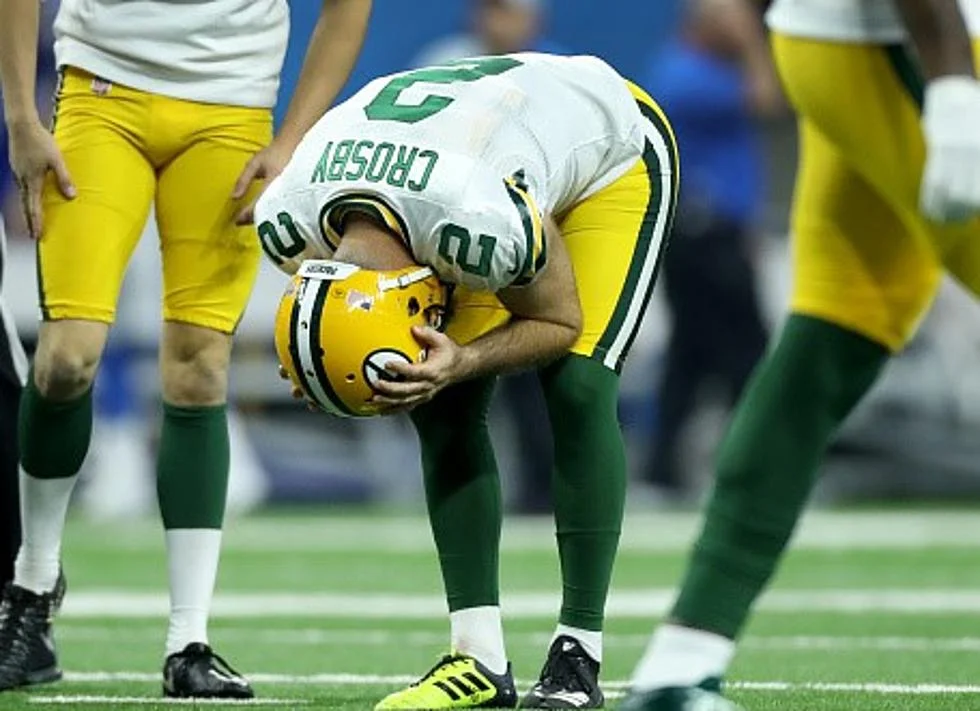
Actually, this “dry run” motor imagery is a well-used technique across several sports.  Golfers always take the imaginary swing or putt before stepping up to the ball.  Batters take their nervous hacks before the pitch. Football placekickers, the ultimate “hero or goat” athletes, focus on their warm-up kick before their team breaks the huddle. While mental imagery and visualization are common for athletes, there is growing evidence that including the actual physical motions, also known as dynamic imagery, creates the best results.

Mar 23, 2013

Thinking Faster Wins Olympic Medals For Brazil Volleyball


Brazil women volleyball players
Think of Brazil, then think of a sport.  Most of us would respond with soccer, or “futebol” in Portuguese, thanks to their five World Cup victories and national obsession with the sport.

However, over the last 12 years, Brazilian volleyball has dominated the world.  The men’s national team is currently ranked first in the world and has won a gold and two silver medals in the last three Olympics.  The women’s team has back to back Olympic gold medals, beating the U.S. in Beijing and London, and is currently ranked second in the world.
So, when University of Illinois psychology professor Arthur Kramer and his research team wanted to find out more about how elite athletes take in and process visual information, it wasn't surprising that he and his team visited the starting place for all aspiring Brazilian netters, the Center for the Development of Volleyball (CDV – Saquarema), in Rio de Janeiro.

Mar 18, 2013

Making Decisions While Avoiding The Sack

Geno Smith
Just ask the primary decision makers across different sports.  Quarterbacks, point guards, or midfielders would agree that making the right choices during a game would be a whole lot easier if it weren’t for the constant distractions.  

Whether it be a blitzing linebacker or a 1v1 defender, staying focused on the next decision seems like an sequential process; something that can’t be dealt with until the current distraction is neutralized.  However, researchers from Carnegie Mellon University have learned that our multitasking brains continue to mull impending decisions in the background while our conscious brain handles the noise in front of us.

Mar 12, 2013

What Could A Coach Do With A Brain Activity Map?

Bo Ryan
Imagine an NCAA basketball coach trying to create a game plan for their first March Madness game with absolutely no video footage of their upcoming opponent.  Sure, he has their roster with player names, height/weight and positions.  He also has a set of specific stats that show the performance of each player and the team during the season.  Yet, there is no opportunity to see the team play as a unit, how they move the ball, or their communication.  The resulting game strategy would be full of educated guesses and assumptions based on just the macro picture of the roster and the micro world of data and statistics.

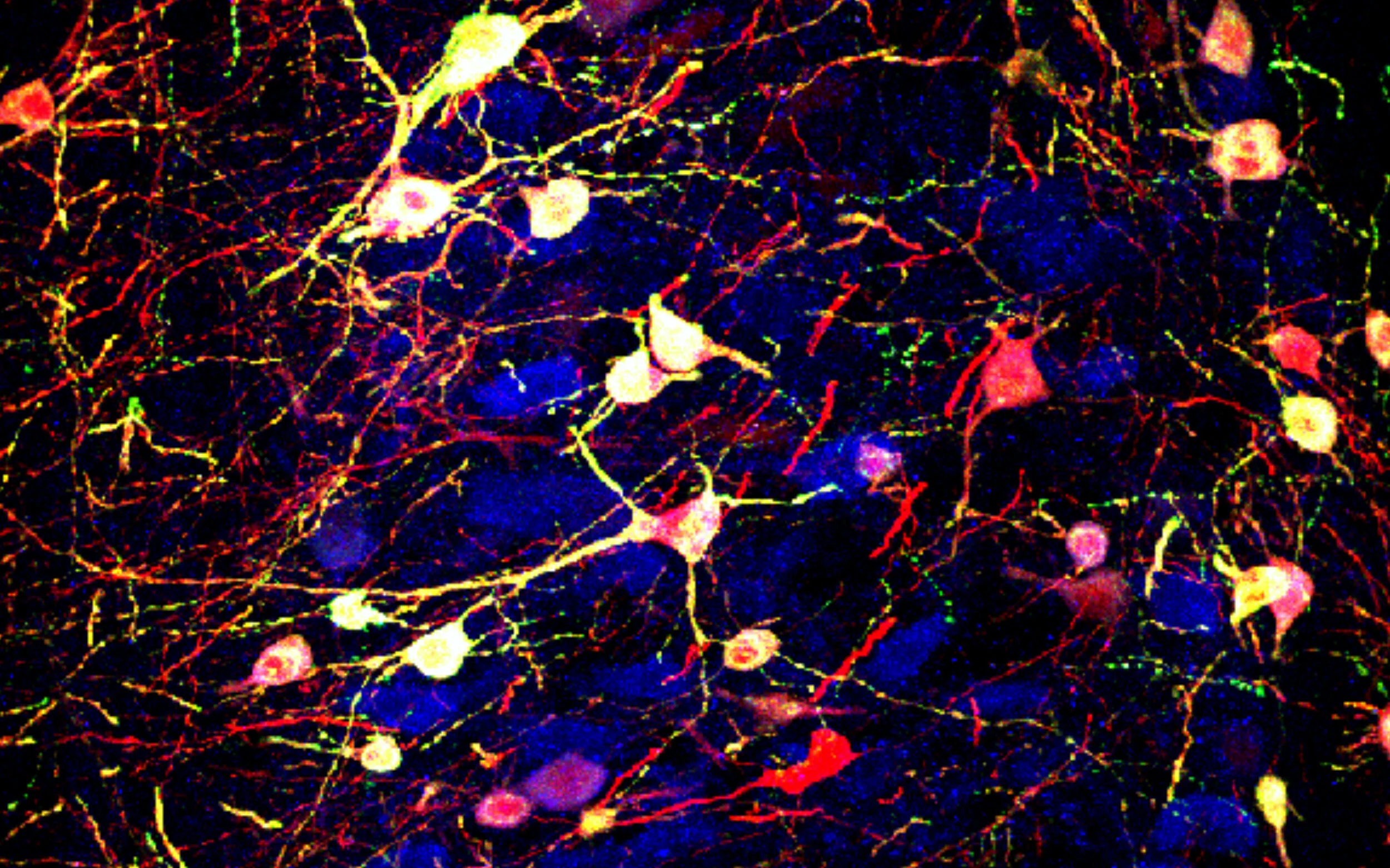
Welcome to the world of today’s neuroscientists. To study the brain, they have the 30,000 foot view from tools like functional MRI scans and the microscopic world of neurons and biochemistry.  Everything in the middle, the constant communications between 100 billion neurons, is unable to be observed, leading to theories and best guesses at how we make decisions, free throws and no-look passes.

Mar 6, 2013

Young Sports Stars Score With A Growth Mindset

Amazing young athletes have been going viral lately.  Did you see the video of the 11-year-old star of the Downey Christian high school varsity basketball team, who recently performed at halftime of an Orlando Magic game?  How about the 9-year-old girl running around and over the boys in her youth football league, who was invited to sit next to NFL Commissioner Roger Goodell at last month’s Super Bowl?  Then there’s the 10th grader who is currently starting for the Erie Otters, a major junior hockey team with an average age of 19, whose agent is Hall of Famer Bobby Orr and who NHL star Sidney Crosby compares to himself.

These young YouTube sensations, Julian NewmanSam Gordon and Connor McDavid, have all been dealing with the crush of recent media attention thanks to their incredible athletic skills.  Certainly, there are more like them across the country waiting to be discovered, but the stories of these three give us a chance to look behind the highlights for similarities and clues of early athletic achievement.  According to two new studies, it is all about their mind-set.